I. Key Components and Principles of the Equipment
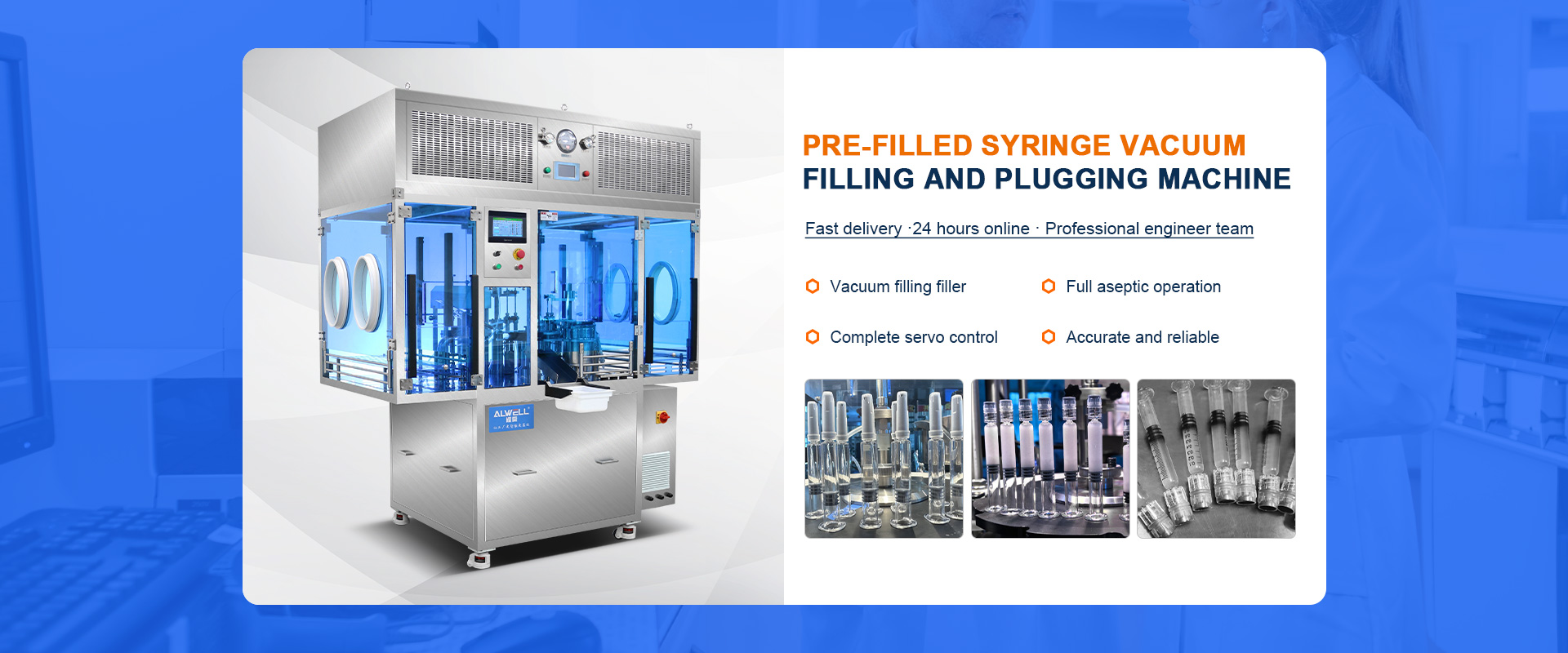
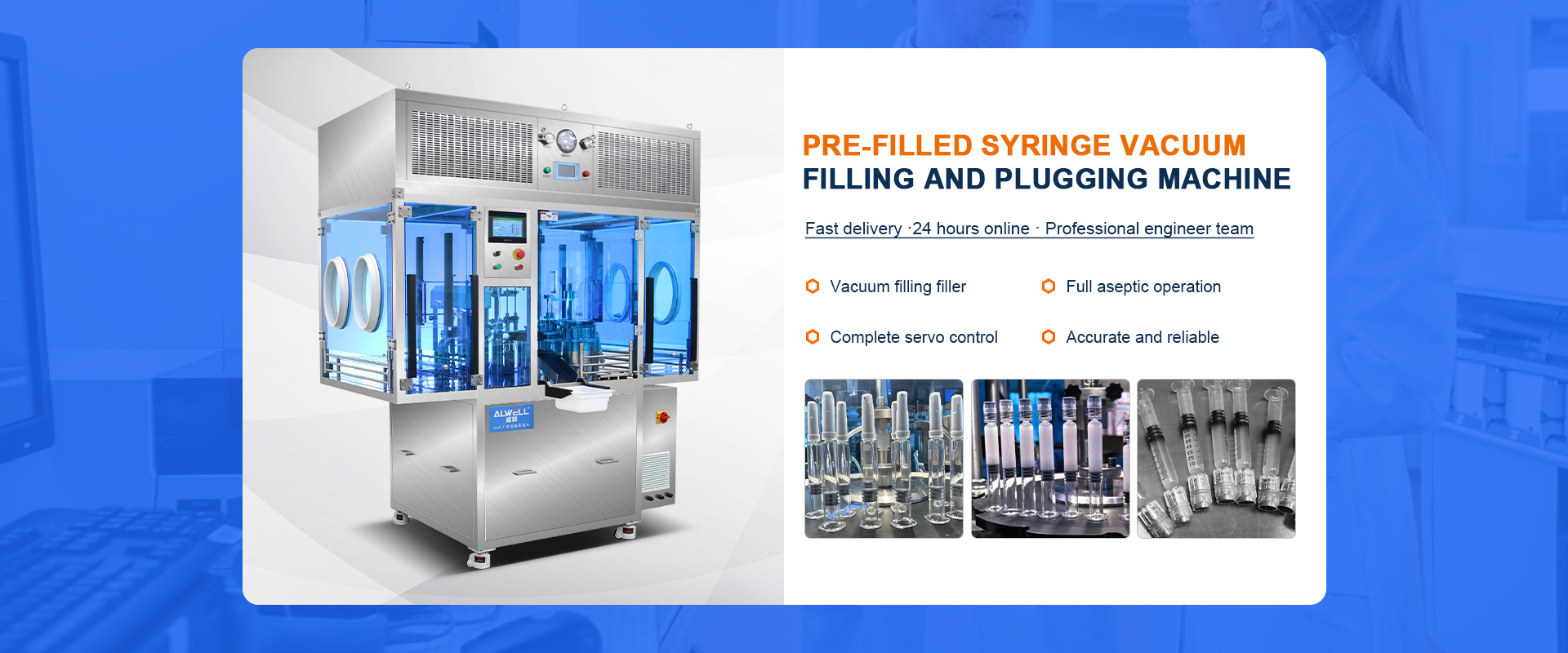
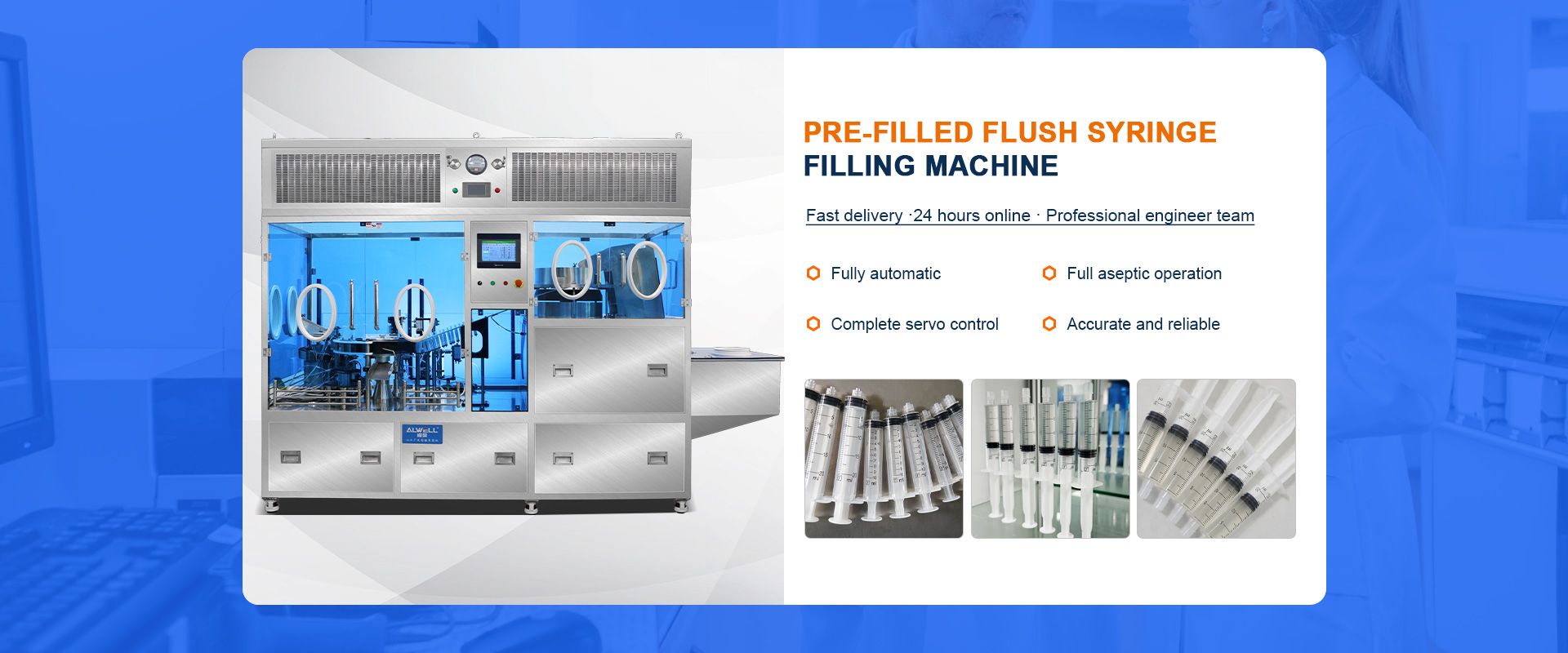
Vacuum filling system
Vacuum chamber design: The filling station needs to be sealed and evacuated to a pressure of -0.8 to -0.95 bar (usually), to eliminate the residual air inside the bottles and prevent the drug solution from oxidizing or forming bubbles.
Quantitative filling system: High-precision peristaltic pump / piston pump (with an accuracy of ±1%) combined with a liquid level sensor, ensuring a constant filling volume (for example, for 1ml cartridge bottles, the error is ≤ ±2%).
Anti-drip and anti-leak feature: The needle is equipped with an automatic retraction function. Immediately after the filling process is completed, it performs reverse suction to prevent the drug solution from adhering to the bottle mouth and causing contamination.
2. Vacuum Insertion System
Cork handling: After the corks are cleaned and siliconized, they are precisely positioned (with positional deviation ≤ 0.5mm) in a vacuum environment using a robotic arm.
Compression mechanism: The servo motor drives the compression rod, applying a constant pressure (typically 20-50N) to push the rubber stopper into the bottle opening. At the same time, it maintains a vacuum state until the sealing is completed.
II. Key Quality Control Phases
Verification of vacuum sealing performance
Online inspection: Monitor the residual oxygen content using a laser headspace analyzer (requirement: ≤ 1.0%), or test the sealing performance using the negative pressure attenuation method (leakage rate < 1×10?? mbar·L/s).
Offline sampling inspection: Immerse the sample in the dyeing solution under pressure and check if any liquid from the medicine seeps out.
2. Detection of the cap's proper placement
The visual system checks the flatness of the plug (with an inclination angle of less than 3°) and the depth of insertion, and cooperates with the infrared sensor to confirm that there are no missing parts.
III. Risk Control Measures
Pollution prevention control
The filling area maintains a Class A cleanliness level (ISO 5 class), with laminar flow hood air velocity of 0.45 ± 0.1 m/s.
The glue plug conveying is carried out through a sealed pipeline to prevent manual contact.
2. Prevent cross-contamination
When replacing the products, strict CIP (in-process cleaning) and SIP (in-process sterilization) procedures are carried out, and triple cleaning with purified water, injection water and steam is employed.
IV. Examples of Operating Procedures
1. Startup Preparation
Confirm the oil level of the vacuum pump, the pressure of the compressed air (≥ 6 bar), and the horizontal calibration of the equipment.
No-load operation test: Simulate 10 cycles of filling and screwing, to verify the positioning accuracy.
2. Handling of Production Interruptions
If the machine stops for more than 15 minutes, the filling pipeline needs to be emptied. After re-vacuuming for 10 minutes, it can be restarted.
Excessive exposure of the rubber stoppers (for more than 30 minutes) must be discarded.
Note: The above parameters need to be determined through process validation based on the specific product characteristics (such as the viscosity of the liquid medicine and the material of the rubber stopper), in accordance with the requirements of the "Good Manufacturing Practice for Pharmaceuticals" (GMP) and FDA 21 CFR Part 211. During the production process, key parameters need to be recorded every 30 minutes, and continuous validation data for 3 batches should be retained to support the stability of the process.