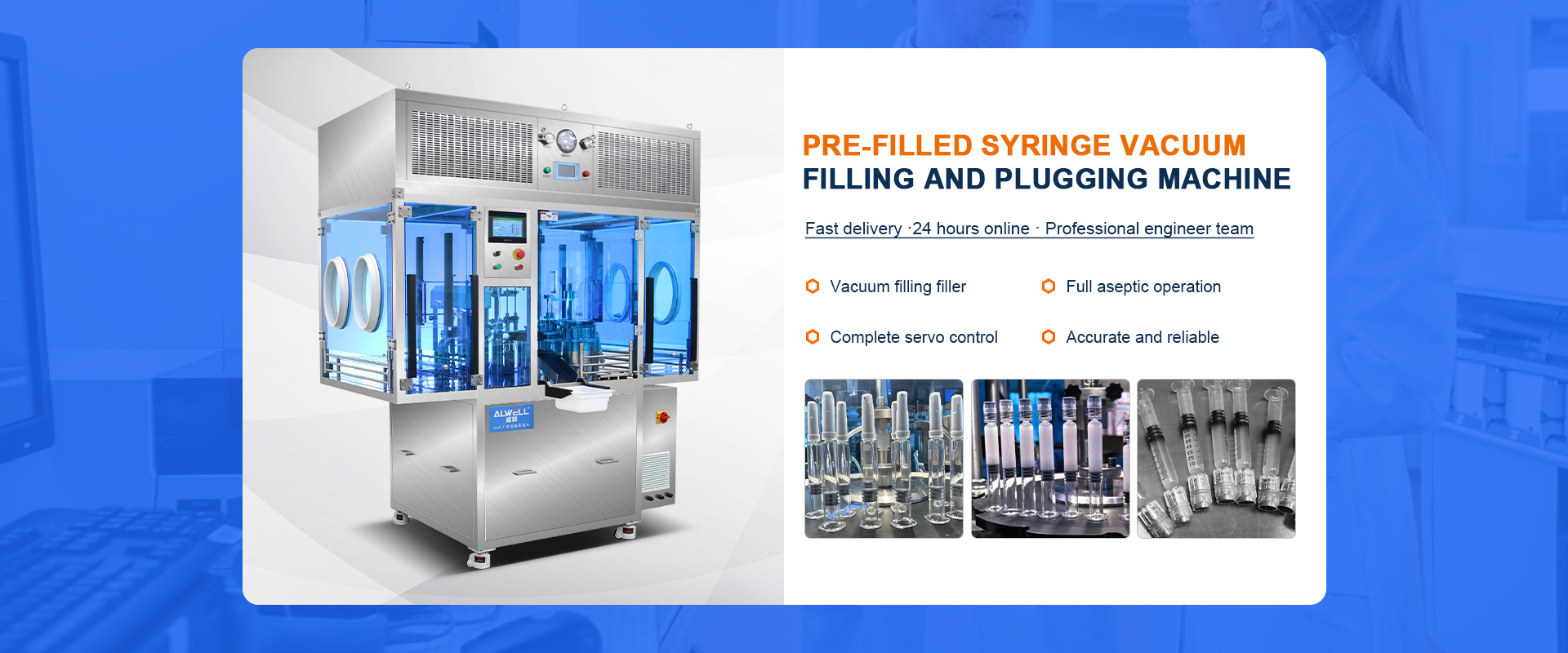
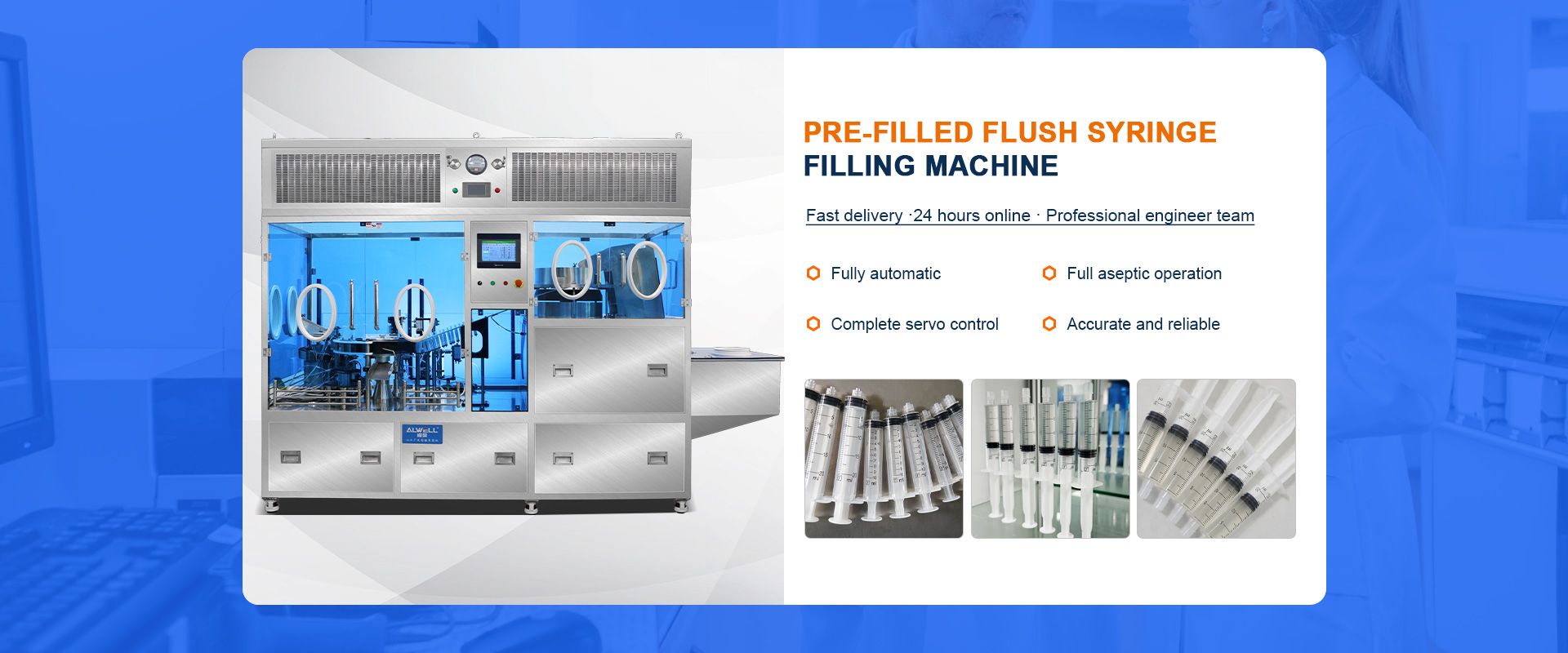
1. Equipment Basic Function Verification
Filling Accuracy and Speed
Confirm that filling volume accuracy (±1%) meets process requirements; test consistency across different specifications (e.g., 0.5 mL, 1 mL).
Verify maximum and minimum filling speeds to ensure they meet specifications; evaluate the impact of speed variation on accuracy.
Seal Integrity Testing
Inspect seal integrity of prefilled syringes after filling (e.g., plunger and needle seals) to prevent leakage or contamination risks.
Sterile Barrier System
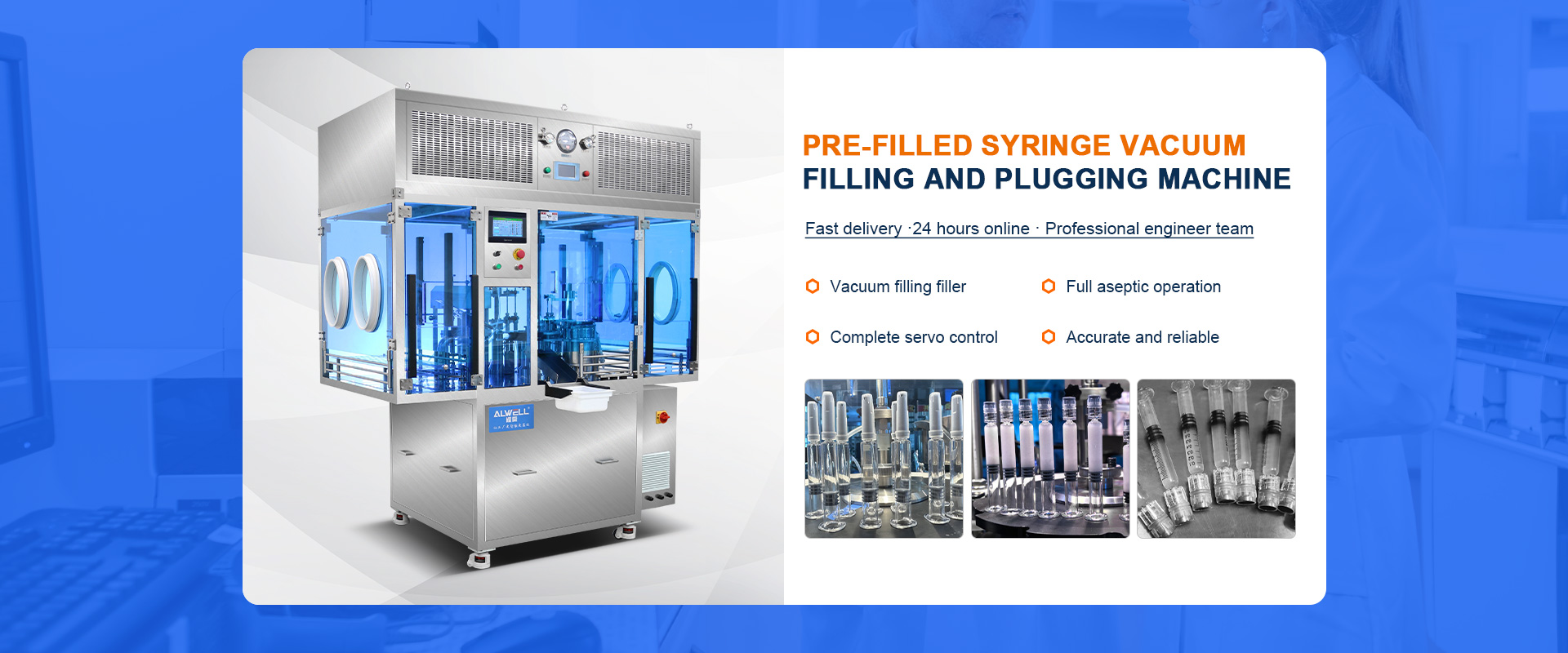
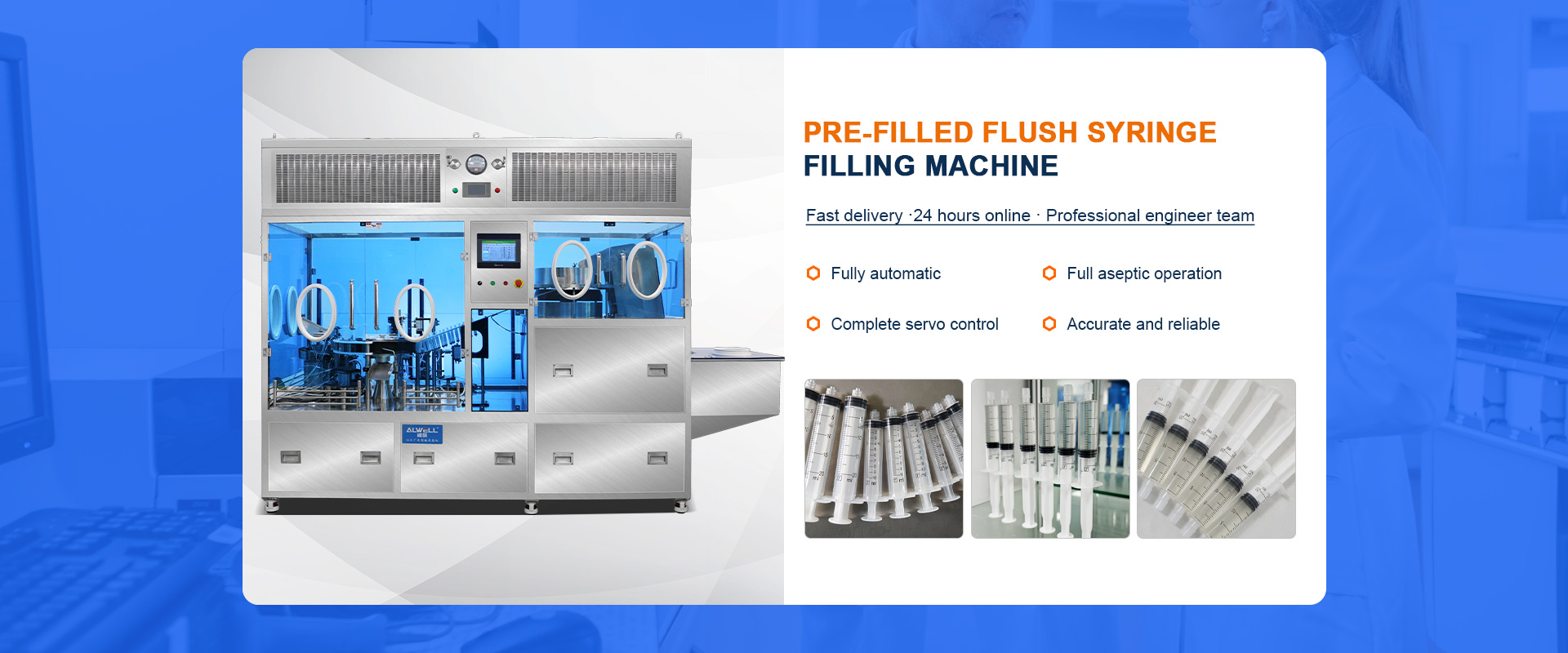
Confirm the integrity of sterile isolators or RABS (Restricted Access Barrier Systems), including differential pressure and particle monitoring.
2. GMP Compliance Checks
Materials and Surface Finishes
Product-contact components (e.g., filling needles, fluid transfer tubing) must be made of 316L stainless steel and medical-grade silicone, meeting sterility requirements.
Cleaning and Sterilization Validation
Verify CIP (Clean-in-Place) and SIP (Sterilize-in-Place) functionality to ensure no dead legs, with residue and microbial limits conforming to standards.
Data Integrity
Confirm that the control system (e.g., PLC) supports traceability, is tamper-proof, and has a fully functional audit trail.
3. Automation and Control Systems
Human-Machine Interface (HMI)
Verify user-friendliness of the operation interface; ensure completeness of parameter setting, alarm logging, and fault diagnosis functions.
Sensors and Feedback
Check sensitivity and reliability of critical sensors (e.g., liquid level detection, tube absence detection leading to fill stop).
Batch Records and Electronic Signatures
Ensure automatic generation of batch reports with support for electronic signatures.
4. Safety and Risk Control
Mechanical Safety
Validate emergency stop buttons, interlocked safety doors, anti-pinch designs, etc.
Biosafety
High-risk areas (e.g., filling needle zone) must have biosafety protection (e.g., laminar airflow containment).
Deviation Handling
Simulate common faults (e.g., filling volume deviation, missing stopper) and confirm the effectiveness of alarm and automatic rejection mechanisms.
5. Documentation and Supplier Support
Technical Documentation Review
Check completeness of equipment manuals, DQ/IQ/OQ/PQ templates, spare parts list, material certificates, etc.
Supplier Services
Confirm that the supplier provides training and maintenance support, with clearly defined response times.
6. Environmental and Utility Compatibility
Utility Interface Verification
Validate compatibility between equipment and facility utilities (e.g., water, electricity, compressed air, nitrogen), including pressure and purity requirements.
Environmental Monitoring
Test the impact of equipment operation on cleanroom environment (e.g., airborne particle counts).
7. Simulated Production Testing
Worst-Case Condition Challenge
Test equipment stability under extreme conditions (e.g., minimum speed, highest viscosity drug solution).
Continuous Operation Test
Conduct a 72-hour continuous run to evaluate equipment reliability and failure rate.
8. Regulatory and Standard Compliance
Ensure equipment complies with the following standards:
GMP requirements
ISO 9001
Notes
User Involvement: Production, Quality, and Engineering departments must participate throughout the FAT (Factory Acceptance Test) to ensure all requirements are covered.
Risk-Based Prioritization: Prioritize testing of high-risk items (e.g., sterility assurance, data integrity).
Record Retention: All test data and deviation reports must be archived as the basis for subsequent SAT (Site Acceptance Test).